
The autumn conference of the 2026 Fifth Global Alumni Summit was successfully held on October 24 at the Holiday Inn in Richmond Hill, in the Greater Toronto Area.
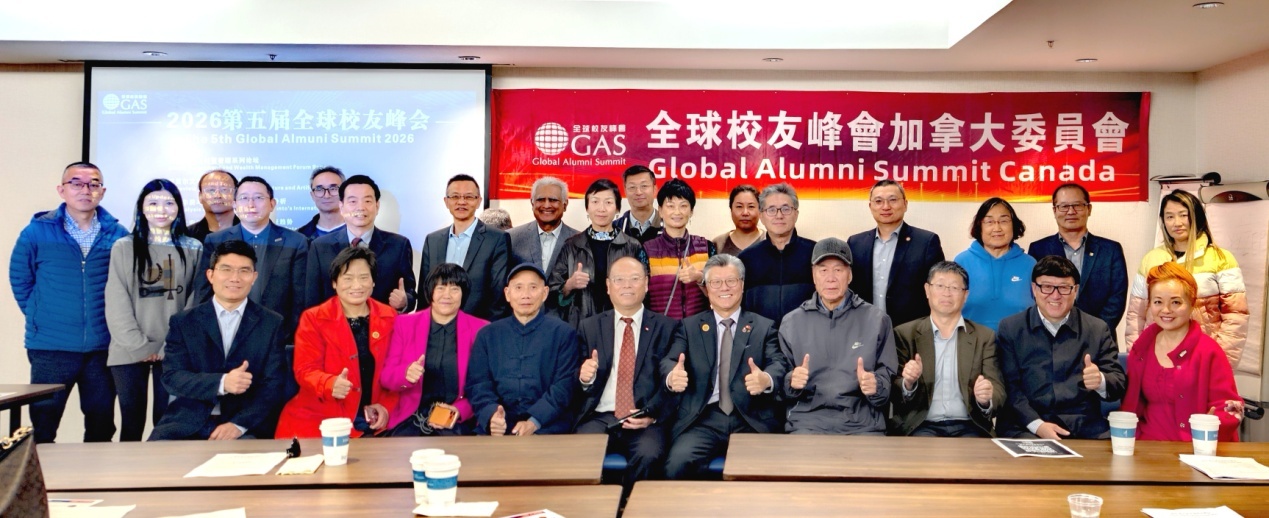
The conference series was jointly organized by the Global Alumni Summit Canada Committee, the International Investment and Financing Forum, and the North American office of City Financial News. Co-organizers were the Canada–China Economic and Trade Association, the Canada–China Enterprise Capital Alliance, the Toronto Tianjin Chamber of Commerce, the Canada Shaanxi Chamber of Commerce, and the Anhui International Chamber of Commerce.
This was the second event following the spring summit launch ceremony and conference held on April 18 this year.
Guests and representatives included Zhang Zhili, Chair of the Global Alumni Summit Canada Committee; Michelle Li, Midland Branch Manager at CHAT Insurance, and branch manager Bin Gao; RBC specialists Frank Zhang, Jayden Rong, Suky Hung, Yang Zhu, Evelyn You, Min Liu, and Cherry Tsang; Jack Duan, CEO of Yuanjing Wealth (远景财富); Professor Hanson Shen of Hanson Engineering and Training Centre; Geng Pingyuan, President of Lianjia Real Estate; Chen Libin, Senior Vice President of Midland Realty; Yuan Dawei, Secretary-General of the Global Alumni Summit Canada Committee; Xu Xiaofeng, the committee’s Director of Industrial Parks; Zhang Xiaoyan, Chair of the Dongfengcai Multicultural Arts Troupe; Mao Yi, President of the Canada Shaanxi Chamber of Commerce; Peggy Pan, Portfolio Manager at CIBC Wealth Management; Tang Youzhi, Co-Chair of the Canada–China Science and Technology Alliance; Pang Jin, Director of the Chinese Dragon and Phoenix Cultural Research Centre; Sun Ruixiang, President of Canada Gonggong News Agency; Zhang Xiwang of the North American Association for Cultural Development; Yang Hong, President of the East China Normal University Alumni Association in Canada; Chen Rong, President of the Chongqing Normal University Alumni Association in Canada; Huang Zanyang, a member of the Jiangsu Poetry Association; Li Xiaoping, a member of the Shaanxi Calligraphers Association; Jim Zhong, Editor-in-Chief of North American Finance; EMMA, manager of the TELUS/KOODO VANTAA Store in Canada; Ji Ming, Vice President of the Canada Shaanxi Chamber of Commerce and CEO of inid.ca; Xi Yue, the chamber’s secretary and founder of Jarel & Co.; Jing Yajun, a chamber director and President of TechInu Inc.; chamber director Rajiv Bhushan; and chamber director Ji Huimin, Vice President of the Canadian Institute of Technology, together with participants from other sectors.
On behalf of the organizing committee, Zhang Zhili, Chair of the Global Alumni Summit Canada Committee, warmly welcomed the guest speakers, scholars, entrepreneurs, and representatives from across the community.
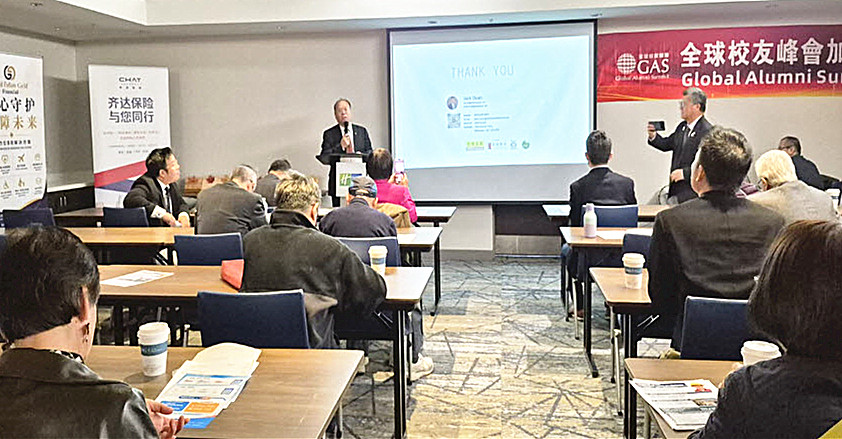
The autumn conference series focused on forward-looking, practical, and original topics, organized into three parts.
The first part, Banking, Insurance, and Wealth Management, covered business lending by Canadian banks and business expansion, Canadian insurance services, real estate developments and trends in Ontario and the Greater Toronto Area, wealth management, and vocational and technical training.
The second part, Cultural Creativity, the Humanities, and Technology, included developments concerning the Nobel Prize in Literature and artificial intelligence, a reading of works by Anne Carson, an analysis of the Nobel Prizes and Toronto’s international influence, and the maple-leaf calligraphy, exhibition, and networking event, “Writing on Red Maple Leaves, Expressing Our Affection for Canada.” These were also the main themes of the 2026 Second Global Alumni Writers Forum and the 2026 Third Artificial Intelligence Literature Symposium.
The third part was devoted to networking, exchange, and collaboration.
Sessions in each field were led by recognized institutions and prominent experts.
RBC specialists Frank Zhang, Jayden Rong, Suky Hung, Yang Zhu, Evelyn You, Min Liu, and Cherry Tsang presented the session on business lending by Canadian banks and business expansion, and answered participants’ questions. They explained how RBC can help companies obtain bank financing when additional funds are needed to expand operations, upgrade equipment, or adopt artificial intelligence technologies. They also outlined RBC’s lending requirements and the latest government lending policies.
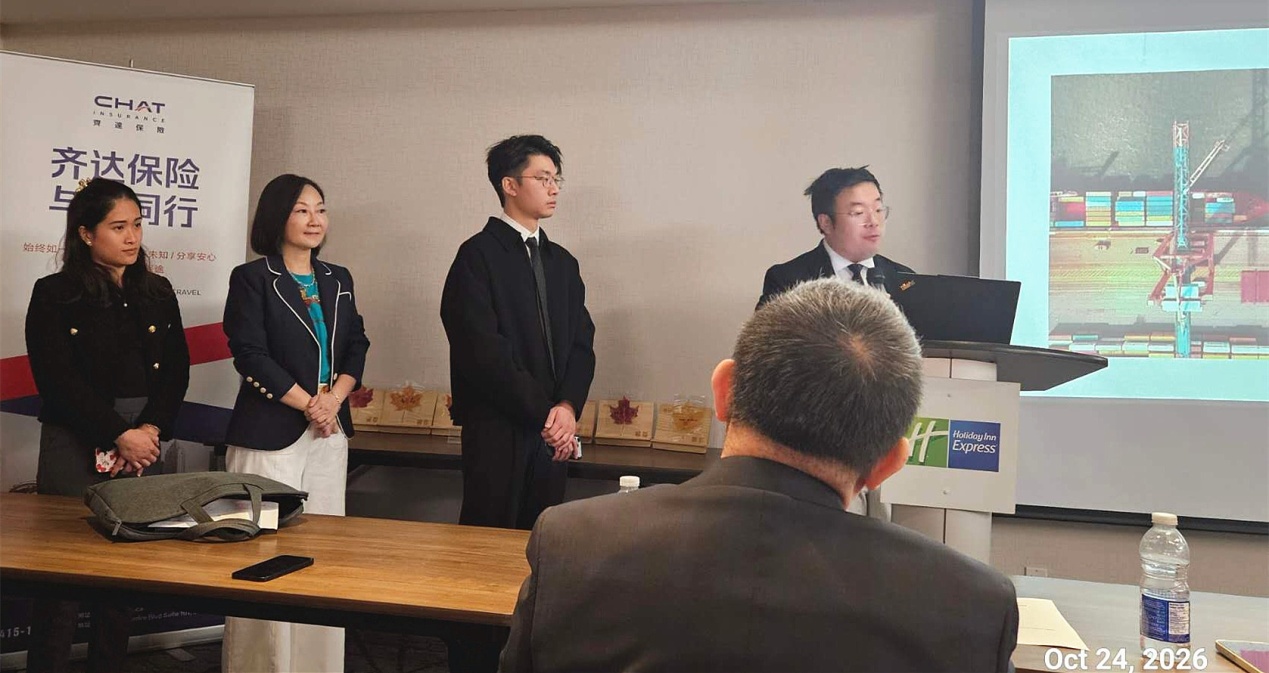
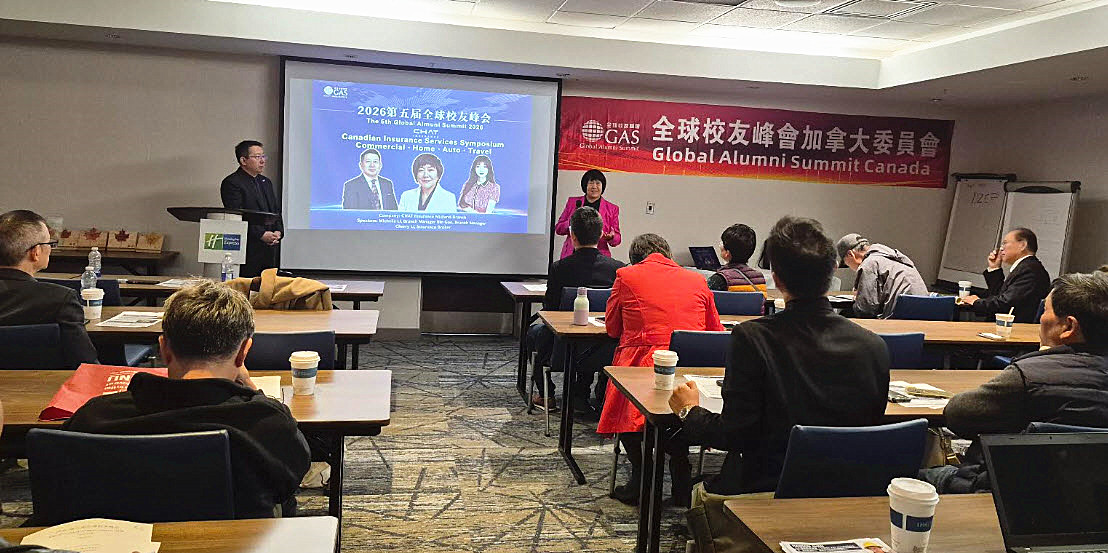
The Canadian insurance services session was delivered by a CHAT Insurance team including branch managers Michelle Li and Bin Gao. They provided a comprehensive introduction to the company’s core commercial, home, auto, and travel insurance services, explained how the company serves individuals, families, and businesses, and discussed relevant policies and recent industry developments.
Jack Duan, CEO of Yuanjing Wealth, introduced the types of life insurance available in Canada, policies and premiums, and insurance considerations for different age groups.
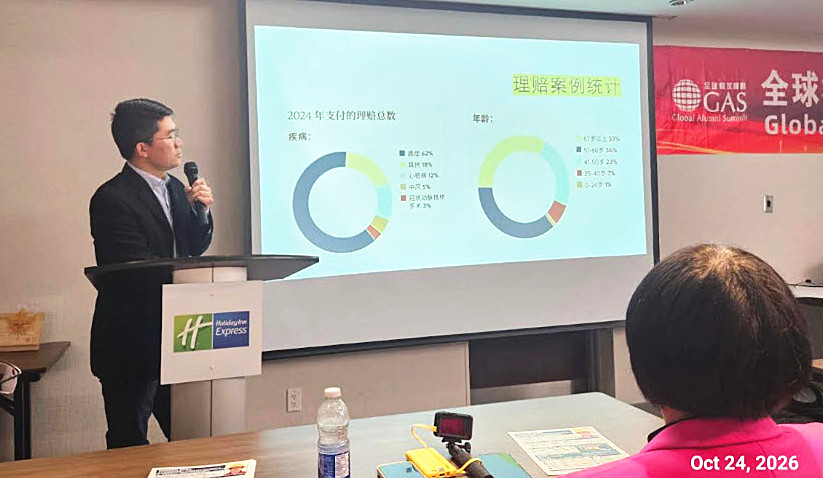
Professor Hanson Shen of Hanson Engineering and Training Centre, a specialist in vocational training, spoke on “Integrating Artificial Intelligence with Industry and Agriculture.” He introduced services in Canadian electrical engineering system design, compliance, and training, and discussed how related equipment and projects from China could be brought into local operation in Canada.
Geng Pingyuan, President of Lianjia Real Estate, and Chen Libin, Senior Vice President of Midland Realty, analysed real estate developments and trends in Ontario and Toronto. Using detailed data, they reviewed recent price trends and future changes concerning condominiums, detached homes, and commercial properties in Ontario and the Greater Toronto Area, helping participants understand the latest developments in the sector.
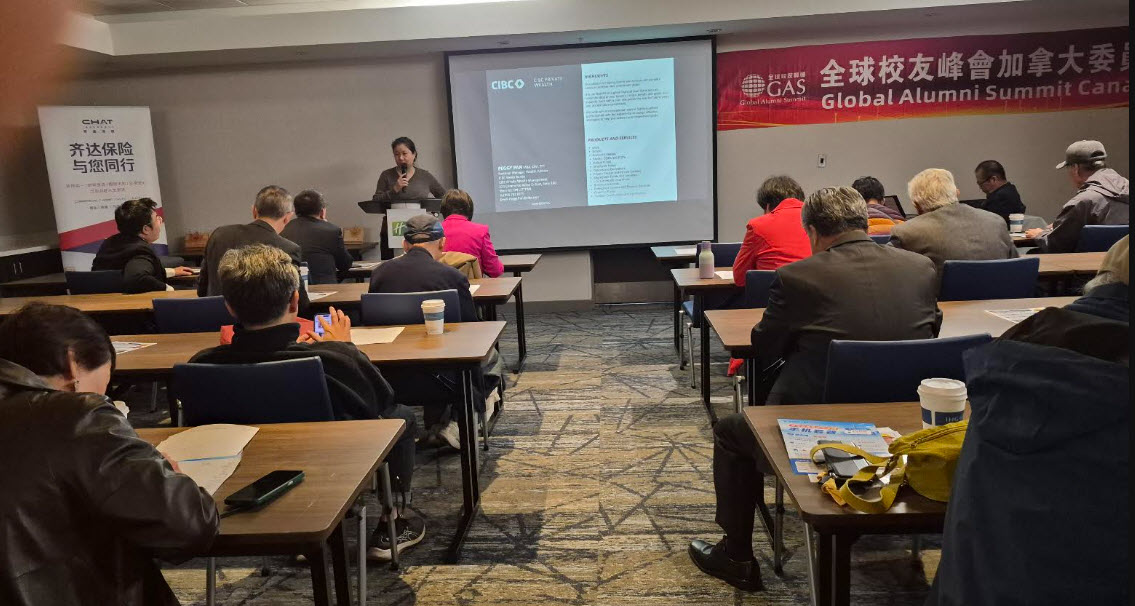
During the wealth management session, Peggy Pan, Portfolio Manager at CIBC Wealth Management, explained the groups for whom principal-protected fund portfolios may be suitable, along with investment amounts and terms, and answered participants’ questions.
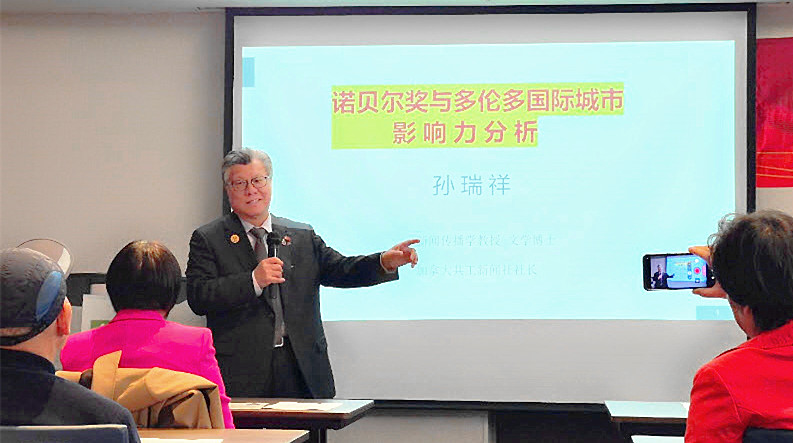
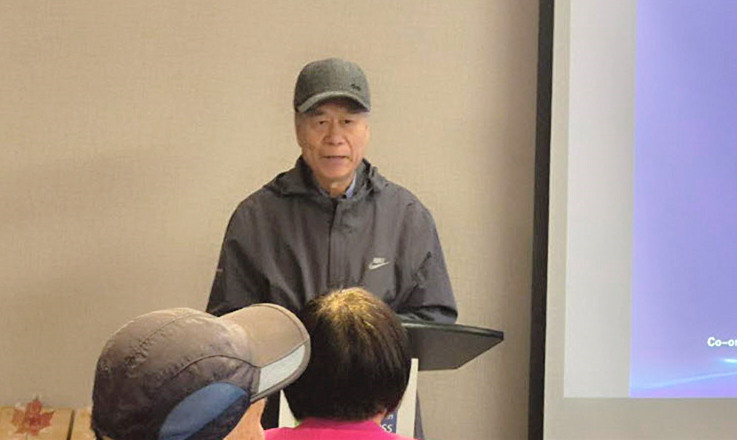
Professor Sun Ruixiang, a member of the Global Alumni Summit expert team, President of Canada Gonggong News Agency, and former Dean of the School of Journalism and Communication at Tianjin Normal University, delivered a presentation entitled “The Nobel Prizes and Toronto’s International Influence.” He analysed the number of Toronto-associated Nobel laureates over the past decade and more, their fields, and the impact of their achievements internationally, in Canada, and in Toronto. He also commented on the complex international situation and Canada’s path towards independent development as a moderately developed country. Participants praised his presentation. In his commentary, scientist Dr. Tang Youzhi, a member of the summit’s expert group, expressed strong agreement with Professor Sun. Dr. Tang noted Canada’s important contributions to scientific and technological progress over more than a century and its high number of Nobel laureates relative to its population. He also said that Toronto, as Canada’s largest city, is important to the national economy, accounting for approximately 20% of Canada’s GDP, and should play a leading role. In his view, Toronto’s mayor should shoulder greater responsibilities than mayors of other cities.
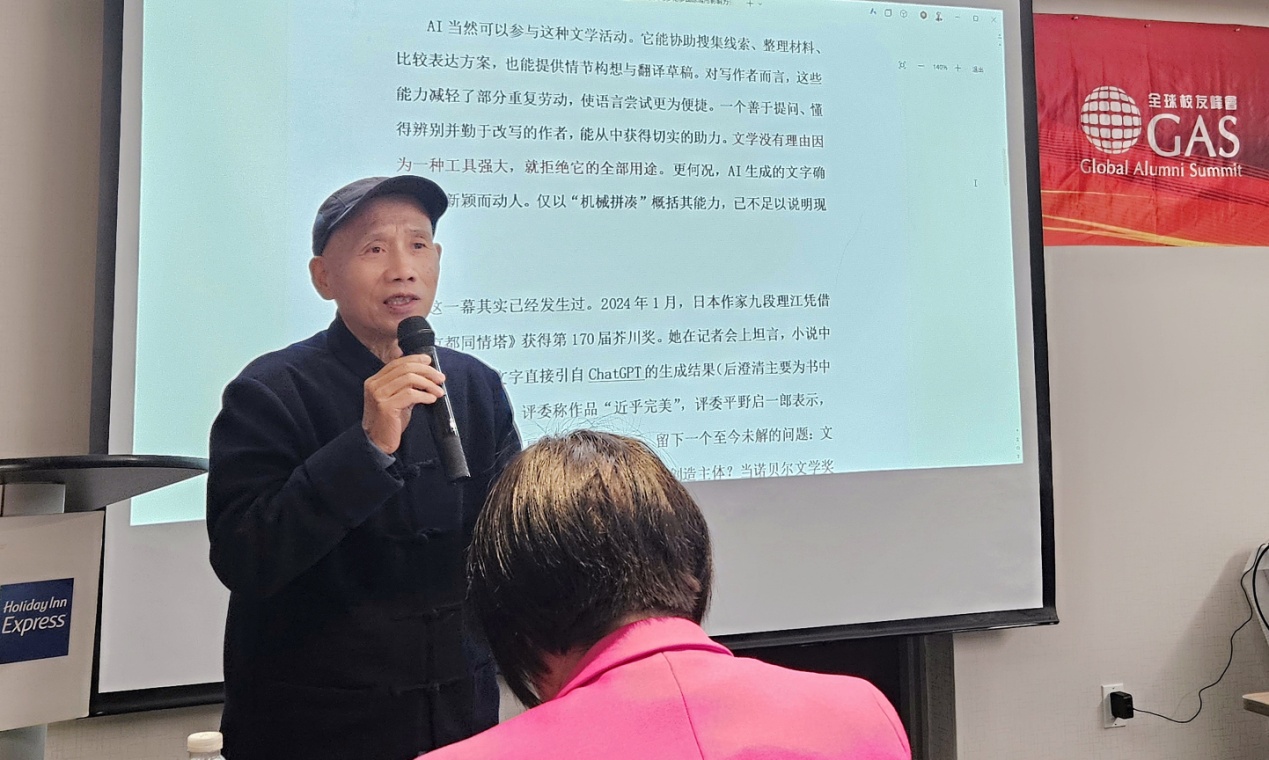
Pang Jin, a member of the Global Alumni Summit expert team and the Chinese Writers Association, Vice President of the Canadian Chinese Writers Association, and a recipient of the inaugural Bing Xin Prose Award, spoke on “The Nobel Prize in Literature and the Outlook for Artificial Intelligence—Reflections on Anne Carson’s Nobel Prize.” He cited the Swedish Academy’s award citation: “for her bold and inventive oeuvre that, in playful dialogue with the classical tradition, has created new forms for contemporary literature.” He asked what gives writers their value as artificial intelligence becomes increasingly involved in producing text. Carson’s writing, he argued, offers a thought-provoking answer: literature’s fundamental value still lies in how an individual experiences the world and expresses it in a distinctive and creative way. The Nobel Prize in Literature has consistently recognized original work, and Carson’s award again demonstrates that a writer’s originality cannot be replaced. On AI’s influence on literary writing, Pang rejected both a blanket refusal to use AI and the complete replacement of human writers by AI as extremes. He advocated using AI as a tool, drawing on its many capabilities while creating distinctive literary work grounded in unique lived experience.
TDSB teacher and journalist Chen Rong gave an expressive reading of Carson’s work:
“O Small Sad Ecstasy of Love”
I like being with you all night with closed eyes.
What luck—here you are
coming
along the stars!
I did a road trip
all over my mind and heart
and
there you were
kneeling by the roadside
with your little toolkit
fixing something.
Give me a world, you have taken the world I was.
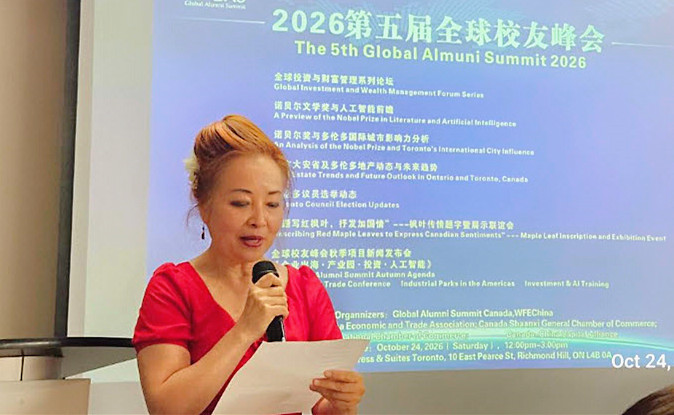
Participants appreciated the poem’s skilful rhetoric. The author’s personal experience, distinctive expression, and thought-provoking style further illustrated why work of this kind cannot readily be replaced by any tool.
The summit also launched its first maple-leaf calligraphy, exhibition, and networking event, “Writing on Red Maple Leaves, Expressing Our Affection for Canada.”
Cultural scholar, writer, and calligrapher Zhang Xiwang explained the background and inscriptions of the maple-leaf calligraphy works and their connections to Chinese and English classics. His examples included the cultural stories behind messages written on maple leaves, the “three lasting achievements” of virtue, service, and writing, and the Chinese idiom jie cao xian huan, which expresses gratitude and the repayment of kindness. These accounts drew considerable interest from guests and delegates. During the networking session, writers, poets, calligraphers, and artists used brushes to inscribe poems, messages, stories behind idioms, and classic English quotations on maple leaves.
During the exhibition, guest speakers and delegates collected maple-leaf calligraphy bearing classic expressions such as hou de (“deep virtue”), zhi zai qian li (“aspiring to travel a thousand miles”), and li gong (“making lasting contributions”).
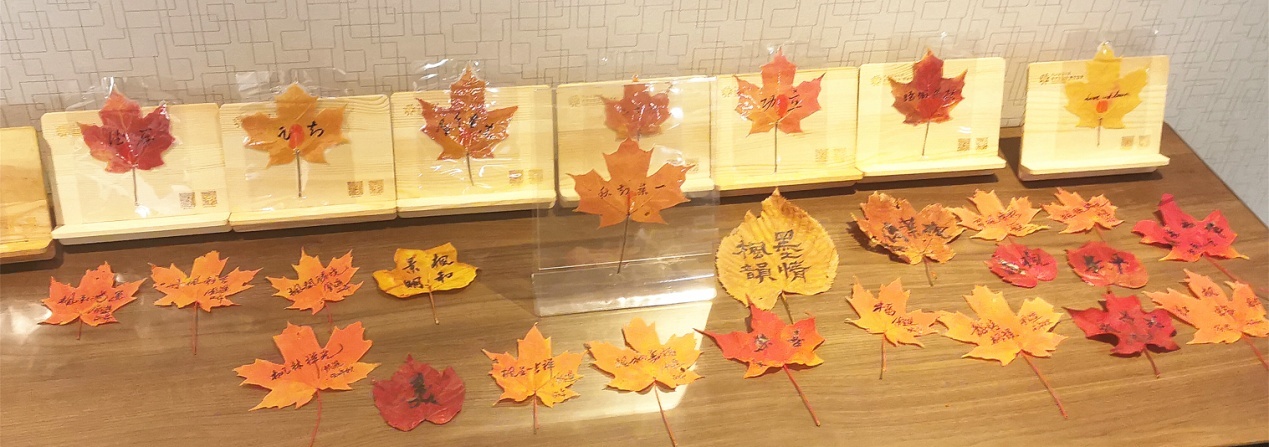
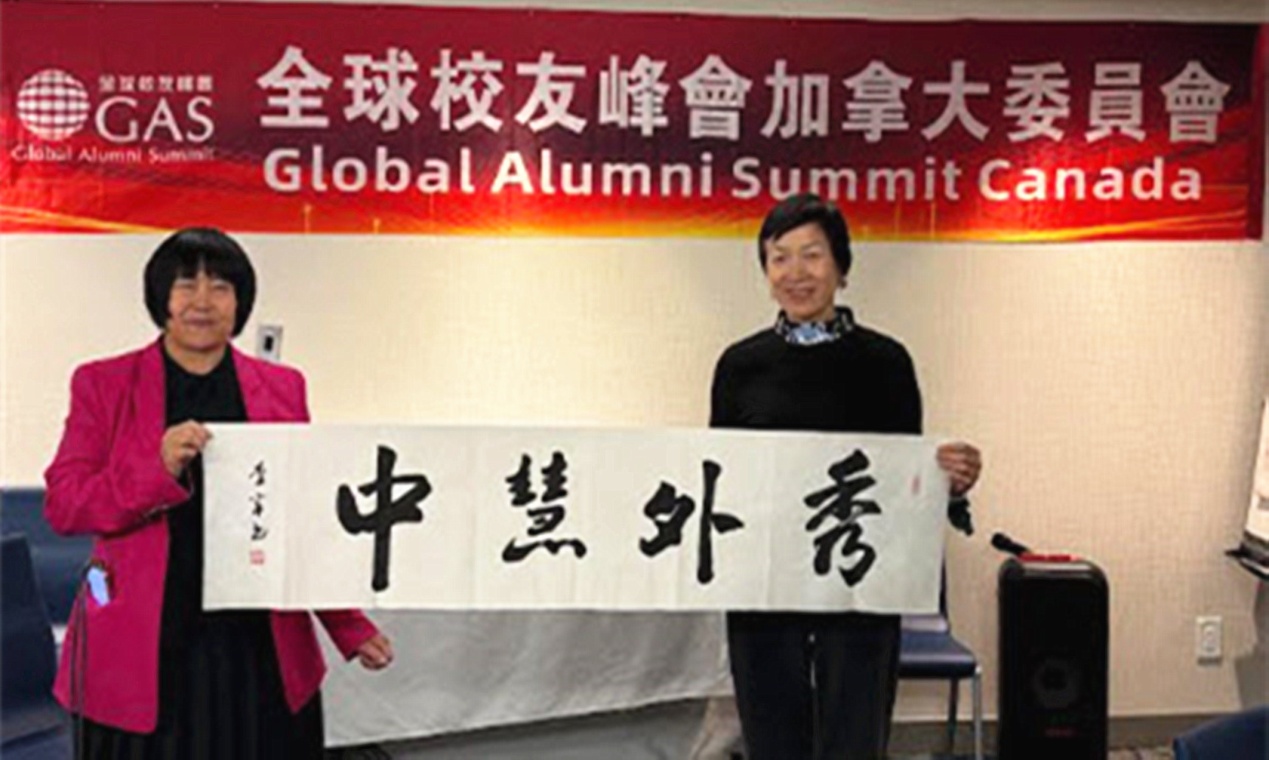
The summit marked the emergence of a distinctive form of maple-leaf calligraphy featuring both Chinese and English inscriptions. By bringing together calligraphy and the maple leaf—two representative cultural symbols of China and Canada—the activity combined art and nature to share and pass on classical Chinese and Western culture. Experts and scholars participating in this first maple-leaf inscription and bilingual exhibition event included writer and calligrapher Zhang Xiwang; cultural scholar and writer Pang Jin; Yang Hong, President of the East China Normal University Alumni Association in Canada and an expert in literature and the arts; Huang Zanyang, a member of the Jiangsu Poetry Association; Li Xiaoping, a member of the Shaanxi Calligraphers Association, the Shaanxi Educational Calligraphers Association, the Xi’an Calligraphers Association, and the Xi’an Artists Association; and Zhang Zhili, a member of the U.S. CFTC and NFA. At the conference, Zhang Zhili displayed a brush-written maple-leaf calligraphy work.
During the networking and collaboration session, guest speakers, scholars, entrepreneurs, and community representatives discussed how to put the conference’s business discussions into practice and advance projects. The organizing committee also updated companies and delegates on ongoing initiatives in international business expansion, industrial parks, targeted investment, cultural activities, and artificial intelligence training. As some summit activities involve companies in China, those companies are currently completing visa and related procedures; the committee will announce further progress as it occurs. RBC and CHAT Insurance provided coffee, tea, desserts, pizza, and other refreshments for the gathering.
Since the spring summit series began this year, support and sponsorship have come from Royal Bank of Canada, CHAT Insurance, CIBC, Yuanjing Wealth, Hanson Engineering and Training Centre, Canada Value Life Financial Planning, Pan-American Financial, and Midland Realty. The organizing committee sincerely thanks these companies for their generous support.
Media organizations, community associations, and prominent community members provided extensive publicity and support for the summit series. They included Canada Gonggong News Agency, Chinese Headline, Chinese Hot Topics, Voice of North America, North American Finance, the North American Association for Cultural Development, and the Dongfengcai Multicultural Arts Troupe. The organizing committee sincerely thanks all these organizations and individuals for their support, attention, and assistance.
The committee also thanks calligraphers Zhang Xiwang and Li Xiaoping for presenting calligraphy works to guest speakers and delegates.
With these activities, the summit concluded successfully.
Looking ahead, the Global Alumni Summit Canada Committee will continue to encourage exchange and connections among alumni worldwide, promote the brands, services, and products of alumni and other businesses, and strengthen the summit’s role as a bridge and platform. It will work to provide services and introductions for professionals, businesses, institutions, and government bodies at all levels, and seek to contribute further to international economic, trade, scientific, technological, cultural, and social development.

